
Boyfriendland
On TikTok, every trend is just the patriarchy

A few months ago at a literary event, I introduced myself to a writer whose book I loved. She then did the oddest thing: she turned and introduced her boyfriend, and began to speak about his accomplishments at length. Despite her book being a BookTok darling, despite being beloved by her community, despite being showered in praise by writers and fans alike, her first instinct was to talk about her partner for five minutes straight. Oh, I thought. I see.
On TikTok, this interaction is the norm. In December, I stated that over half of the trends that go viral end up being co-opted by people showing off their male partners. I made it a point to point out how few trends are men showing off their girlfriends or wives: 99% of the time, it’s women showing off their boyfriends or husbands. I was keeping a 2024 tally and I eventually just gave up sometime in March: at this point, the app is the patriarchy itself.
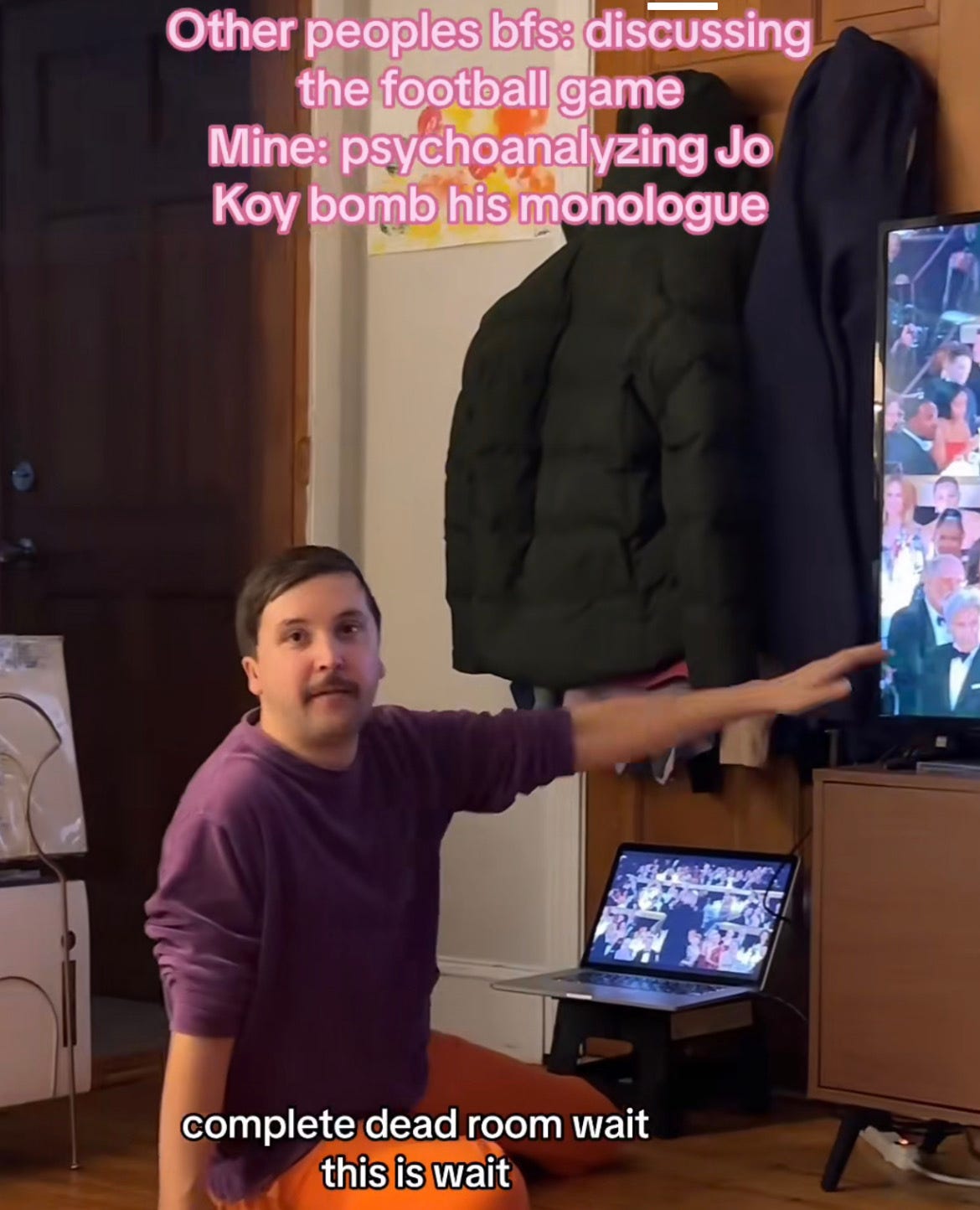

The point of media studies is to look at a text and understand the meaning underneath. Sociology does this with society itself: when we create artifacts, what do we want to impart? What are the values upheld by a civilization? What’s important to which group of people?
I’m not bullying the women and girls of TikTok: I watched Girls. I listen to Taylor Swift sometimes. I’m deeply entrenched in the world of white women, believe me. For me, it’s more about ringing an alarm bell: why is every. single. post. about someone’s boyfriend? I feel like Miranda in that one episode of Sex and the City. How is it that these posts go viral once a week?
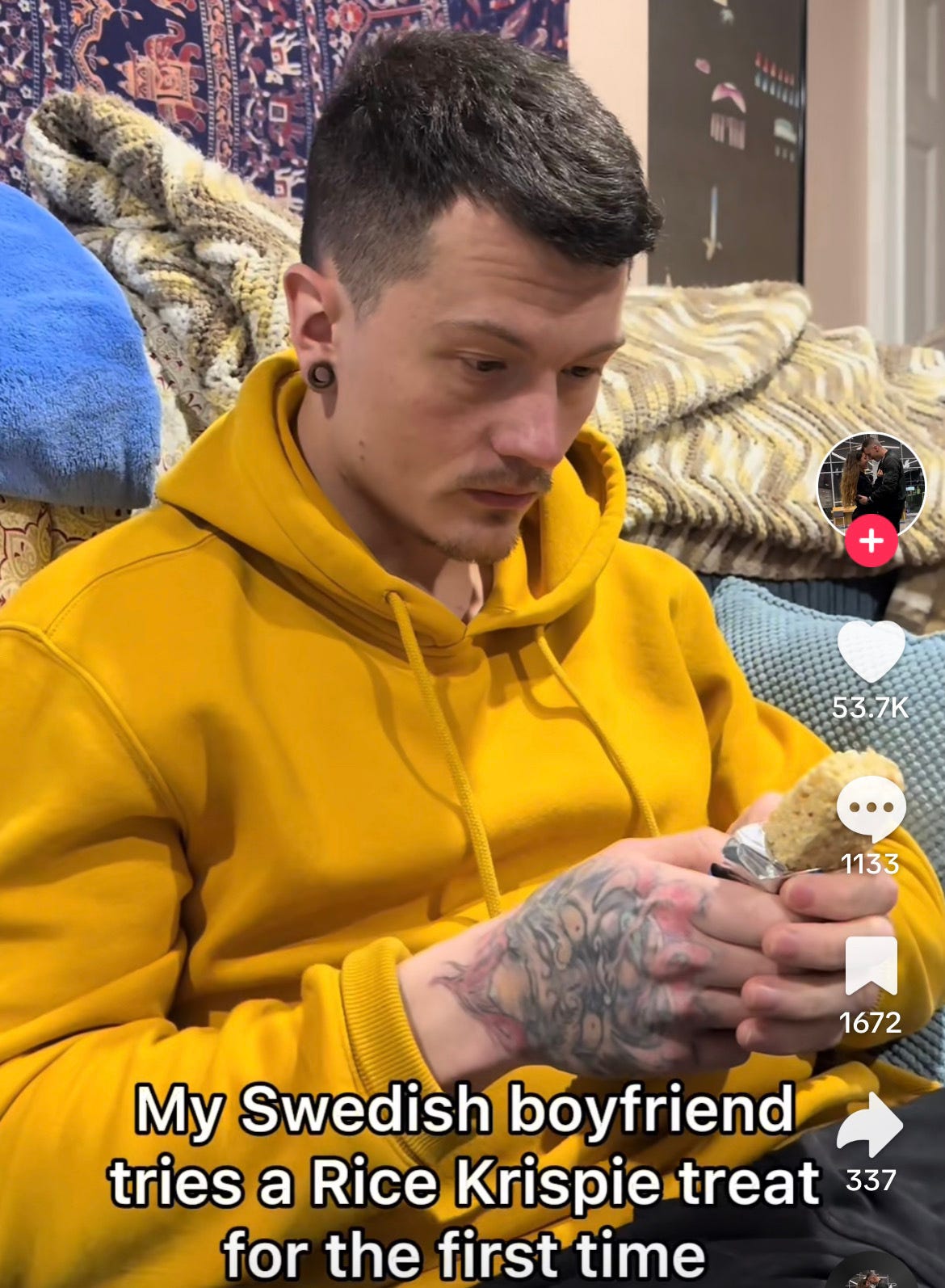
Two weeks ago, I posted about a wedding in Lake Como that went viral. In the video, the groom pops open a bottle of champagne and points it directly at his bride, spraying the entire bottle over her face, dress, and hair. The comments were predictable: he’s a golden retriever! He’s just excited! Why can’t you lighten up and have fun! Why are people complaining such whiny little bitches?

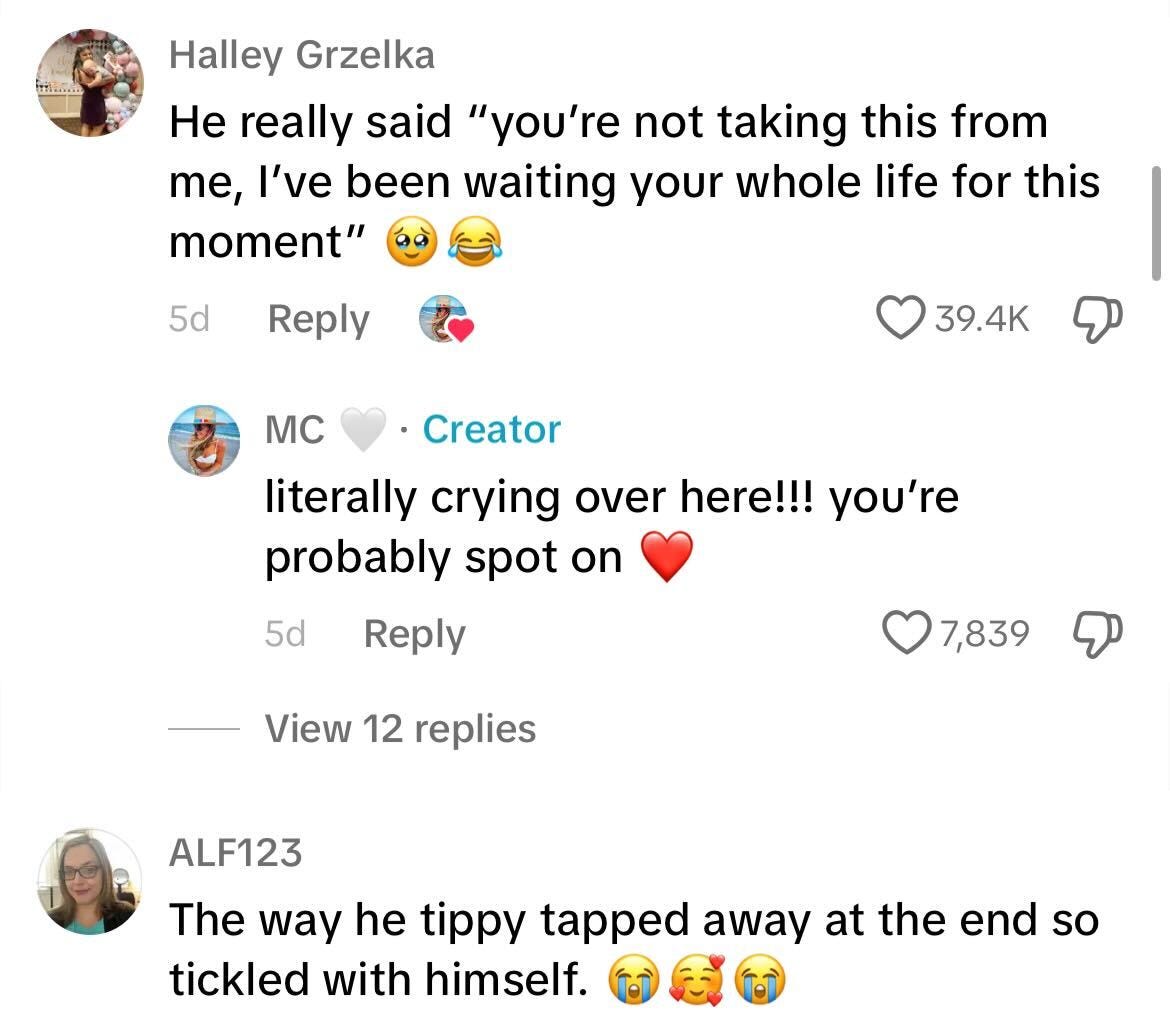
In my video, I asked why men (always men, only men) get to behave atrociously and have millions of people rush to defend them. In a video that went viral recently, a woman begs her father not to flip her over on her wedding day. He does, of course, and she smiles lovingly in a chagrined manner (thank you, Gillian Flynn). The comments were surprising: women were giddy about the crossing of the boundary, all laughs and heart eye emojis. “The way he tippy tapped away so tickled with himself!”
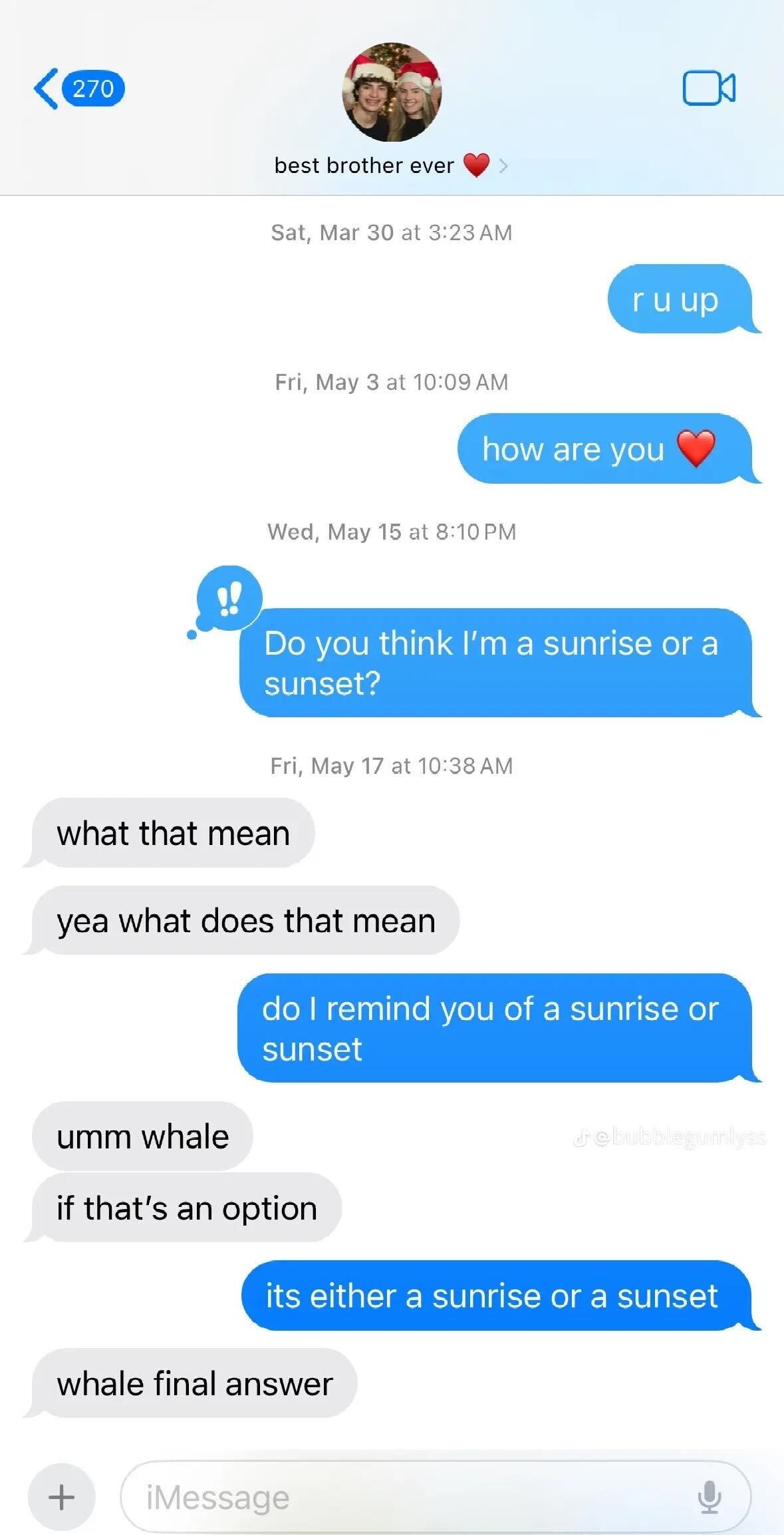
When society teaches people to accept bad behavior, bad behavior becomes normalized. I often forget how entrenched these things are. A trend that refuses to die is “texts from my situationship”, which has now morphed into “sometimes all you need is your boy best friend”. In this trend, girls text their male friends and the men brutalize them in response. I saw one where he called the original poster the r slur, and another where the boy in question says he won’t give the OP advice because “she won’t listen anyway”.
Another trend, highlighted above, is “texts from my brother”— displaying the emotional immaturity of little brothers, sure, but I can’t be the only one connecting these dots: when you are taught by society that this is how men speak to and treat women they love, a lot more people end up in terrible relationships because they don’t know any better. We end up with shut up rings, and men sexualizing their wives in their wedding vows, and men spraying their wives with champagne but you know—boys will be boys. They’re just like that. What do you expect? The rise of situationships and people accepting absolute crumbs from people they’re dating makes a lot of sense when you realize accepting poor behavior is part and parcel of American dating culture. If your own brother or best friend is calling you slurs, how can you expect a man will respect you or view you as an equal?
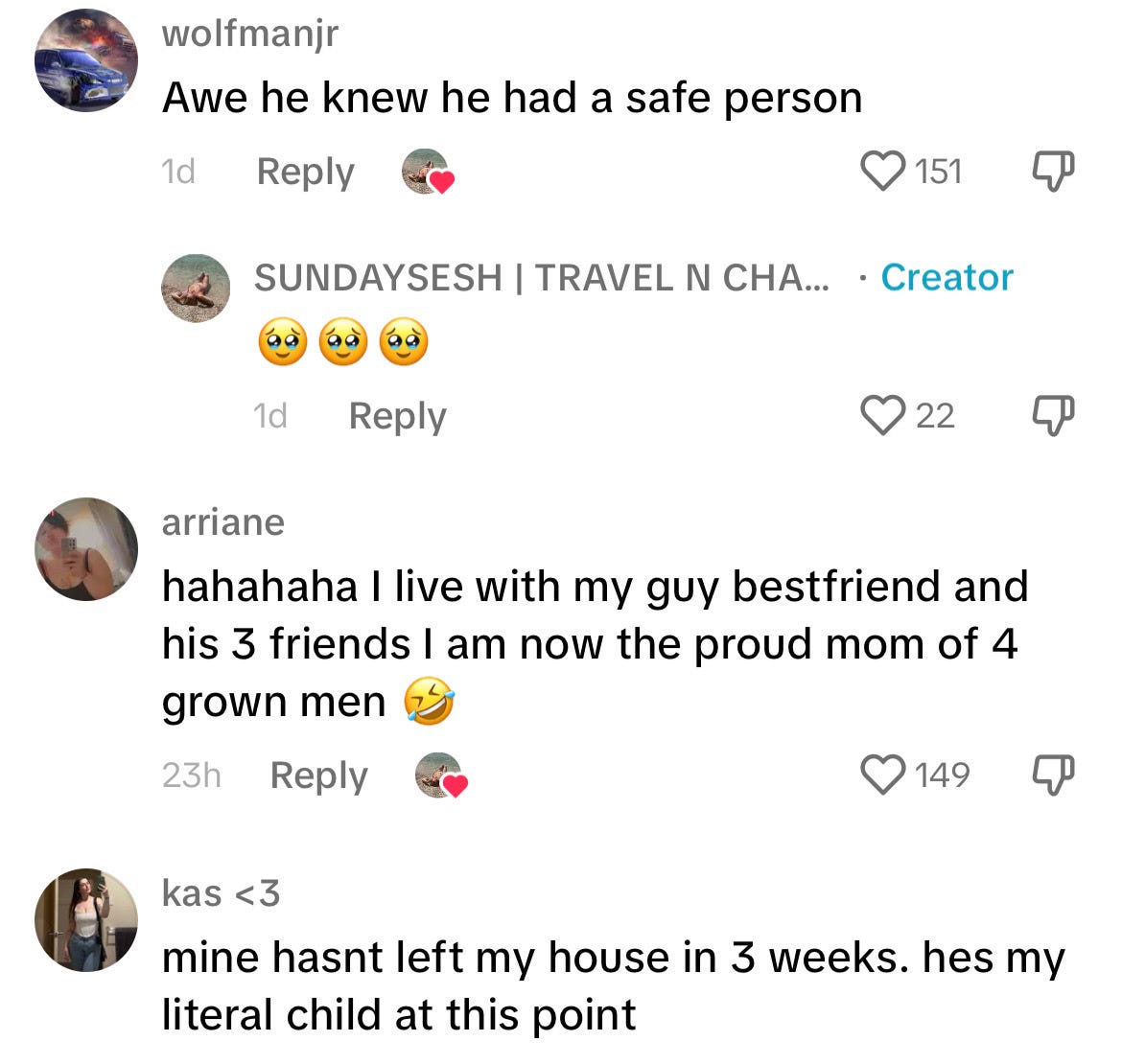
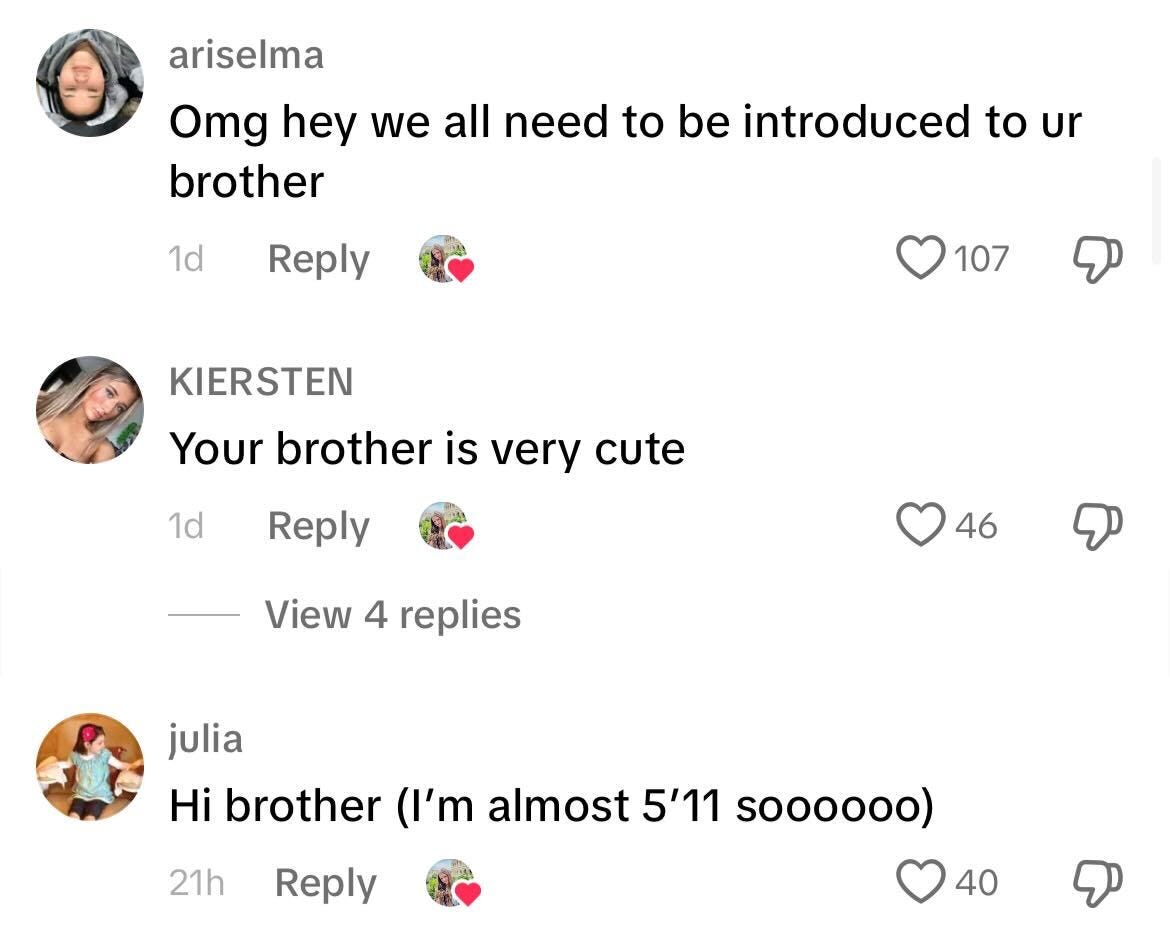
The most insidious type of post is the one where there’s no boyfriend but instead, the poster is showing off their hot brother or dad. This is odd on two levels: firstly, the awareness that the family member is attractive. Secondly, the recording and posting of the video in order to receive likes and comments about… how hot your family member is? The worst part: it’s not even implicit. Many of these posts have the original posters liking comments, exalting in their proximity to an attractive man. The TikTok brainrot is so powerful that if you don’t have a boyfriend, simply standing near a man is enough: I find it hard to overstate how much people love men on the app.

I say all of this to hold up a mirror to society: I understand that there are more women on social media than men, and that for a certain segment of society, having a boyfriend or a husband is quite literally the most important thing you can do. But the millions (millions!) of posts about it make me question what exactly is happening. TikTok content is memetic: when something performs well, people jump on the bandwagon and trends are born. But as someone with two degrees in sociology, I shudder a bit when I see the types of content that breaks through. It’s another to watch every trend boil down to: look at this man. Look at me standing near this man. Look at my man. My man, my man, my man.
We point our cameras at the things we love: in a patriarchal society, it stands to reason that more often than not, these values will be reflected. In recent times, however, this has curdled into something ominous (at least to me). It’s probably a coincidence that this content is so popular on TikTok as Roe is repealed and tradwife numbers rise, right? There simply can’t be a connection… but what do I know? I’m just a hater without a boyfriend.
I will be thinking more about this… for straight women, definitely feels to me like a kind of status signaling to have a partner (versus being single woman). Akin to a shopping haul video: “look at my man”
so interesting and very true -- thinking about this alongside the new Sabrina Carpenter song where she pleads with her man not to embarrass her! women's status can be gained or lost based on the attractiveness and behaviour of the proximal boy -- but the bar for "good" behaviour or attractiveness is still on the floor